
Portable Upholstery Cleaner Manufacturer & Supplier
CLEVO supplies portable upholstery cleaning machines for cleaning contractors, hospitality teams and distributors. CB-1 applies foam and brushes compatible fabric; CB-2 and CB-3 also recover dirty foam and liquid. Choose the workflow your team needs, then the tank arrangement that fits your seating-cleaning schedule. Each model below has its own complete specifications and accessory details. Request a quotation for the machines and service items you want to buy.
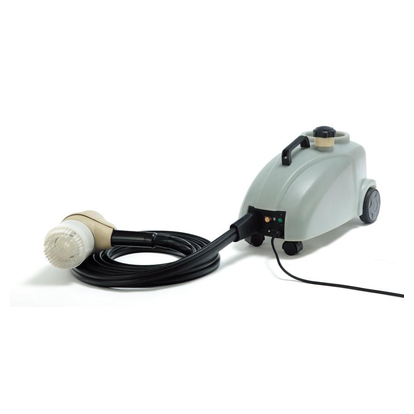

Choose the working format for your site
Before choosing a model, decide how you will remove loosened soil. CB-1 needs a separate residue-removal step. In contrast, CB-2 and CB-3 include recovery, with different tank arrangements for planning filling and emptying.
Comparing other cleaning equipment? Return to all commercial cleaning equipment.
Add foam brushing to an existing cleaning routine
Choose CB-1 when your process already includes a suitable way to remove loosened residue. Its powered hand brush works detergent into the fabric surface. However, the machine has no suction recovery.
View models and specifications →Apply, brush and recover with one machine
Apply foam and brush with CB-2 before recovering residue with its 1000 W vacuum motor. When planning section-by-section seating work, allow for filling its 6.5 L clean-water tank and emptying its 4.5 L recovery tank.
View models and specifications →Keep foam solution and clean water separate
CB-3 has a 2.3 L foam-solution tank, as well as a 21 L clean-water tank and a 30 L recovery tank. Choose it when your job calls for this larger water-handling arrangement and onboard recovery.
View models and specifications →Compare upholstery-cleaning workflows and tank arrangements
Compare two or three models by their cleaning functions, including foam brushing and recovery, then review tank purpose and component ratings. When you need more detail, each model links to its complete specifications.
Scroll within the table to see more details or models. The headings stay in view.
| Specification | CB-1 |
 CB-2 |
|---|---|---|
| Cleaning functions & tank arrangement | ||
| FunctionsDifferent | Foam generation and brushing | Foam generation, brushing and vacuum recovery |
| Tank capacity | 8.5 L | --- |
| Clean-water tank capacity | --- | 6.5 L |
| Recovery tank capacity | --- | 4.5 L |
| Electrical & component ratings | ||
| Air pump power | 20 W | --- |
| Water pump power | 25 W | --- |
| Vacuum motor power | --- | 1000 W |
| Packing & handling | ||
| Packing dimensionsDifferent | 560 × 320 × 430 mm | 820 × 510 × 570 mm |
| WeightDifferent | 15 kg | 28 kg |
Keep general tank capacity, foam-solution capacity, clean water and recovery capacity separate. Component motor ratings apply to the named motor; use the supplied machine specification for its electrical connection.
Your model and its complete specifications
When comparing models, match each tank by its purpose and each motor by its role. Plan filling and emptying separately, and allow for fabric, solution use, recovery passes and ventilation when scheduling cleaning and drying.
No matching models. Try another name.
CB-1 foam-brushing machine
Foam generation and powered brushing; no suction recovery
CB-1
When cleaning compatible upholstery, CB-1 applies foam and uses a powered brush to work detergent into the fabric. If your cleaning routine already includes a suitable residue-removal method, choose this model. The 4.5 in brush has a 60 W, 24 V DC motor, while separate air and water pumps supply the foam system. For example, your operator can treat seat cushions, backrests and edges in small sections, controlling brush contact and the amount applied. However, CB-1 has no vacuum-recovery function.
| Specification | CB-1 |
|---|---|
| Packing dimensions | 560 × 320 × 430 mm |
| Voltage / frequency | 220–240 V / 50 / 60 Hz |
| Air pump power | 20 W |
| Water pump power | 25 W |
| Brush motor (power / voltage) | 60 W / 24 V DC |
| Brush diameter | 4.5 in |
| Tank capacity | 8.5 L |
| Weight | 15 kg |
| Functions | Foam generation and brushing |
Because CB-1 provides foam brushing without suction recovery, include a suitable separate residue-removal step in your fabric-care process. When planning delivery, use the packing dimensions.
CB-2
Foam brushing and recovery with 6.5 L / 4.5 L tanks
CB-2
If your upholstery work needs residue collection in the same machine, CB-2 combines foam generation, powered brushing and vacuum recovery. In addition, it has a 1000 W vacuum motor and the same listed 4.5 in, 60 W brush format as CB-1. Because it has separate 6.5 L clean-water and 4.5 L recovery tanks, plan filling and emptying independently. For your cleaning team, that means planning each seating section around both tanks while recovering dirty foam through the appropriate tool.
| Specification | CB-2 |
|---|---|
| Packing dimensions | 820 × 510 × 570 mm |
| Voltage / frequency | 220–240 V / 50 / 60 Hz |
| Vacuum motor power | 1000 W |
| Weight | 28 kg |
| Brush motor (power / voltage) | 60 W / 24 V DC |
| Brush diameter | 4.5 in |
| Clean-water tank capacity | 6.5 L |
| Recovery tank capacity | 4.5 L |
| Functions | Foam generation, brushing and vacuum recovery |
When scheduling the work, plan clean-water filling and recovery-tank emptying separately. The 1000 W rating applies to the vacuum motor; use the supplied machine's electrical specification when preparing the site connection.
CB-3
Separate foam-solution, clean-water and recovery tanks
CB-3
If your workflow needs a three-tank arrangement, CB-3 provides 2.3 L for foam solution, 21 L for clean water and 30 L for recovered liquid. In addition, it combines foam generation, brushing and recovery, with a 1600 W recovery motor and a listed vacuum of 250 mbar. Choose this model when larger clean-water and recovery capacities fit your upholstery-cleaning schedule. Because each tank has a separate role, your operator can manage the cleaning solution and collected waste separately during the job.
| Specification | CB-3 |
|---|---|
| Packing dimensions | 680 × 420 × 810 mm |
| Recovery motor (voltage / frequency / power) | 220 V / 50 Hz / 1600 W |
| Air pump (voltage / frequency / power) | 220 V / 50 Hz / 20 W |
| Spray motor (voltage / power) | 24 V / 30 W |
| Functions | Foam generation, brushing and vacuum recovery |
| Vacuum | 250 mbar |
| Noise level | 83 dB |
| Foam-solution tank capacity | 2.3 L |
| Clean-water tank capacity | 21 L |
| Recovery tank capacity | 30 L |
Match the foam solution, clean water and recovered waste to their separate tanks. Follow the electrical instructions for the machine and its named components, and keep the recovery path clear during use.
The differences that affect your choice
The main buying decision is whether you need onboard recovery. Then compare the water-handling arrangement and the tools required for your upholstery work.
CB-1 for brushing; CB-2 or CB-3 for recovery
If you already have a residue-removal method, CB-1 supplies the foam and powered brushing for your process. In contrast, CB-2 and CB-3 also collect dirty foam and recoverable liquid. Therefore, shortlist CB-2 and CB-3 if your team needs suction as part of the same machine.
CB-2 or CB-3 for your water-handling plan
CB-2 provides a 6.5 L clean-water tank, whereas its recovery tank holds 4.5 L. By comparison, CB-3 separates 2.3 L foam solution from 21 L clean water and 30 L recovery. Use these capacities when planning filling and waste disposal around the seating being cleaned.
Recovery ratings and the fabric result
CB-2 lists a 1000 W vacuum motor, whereas CB-3 lists a 1600 W recovery motor and 250 mbar vacuum. However, the tool seal, fabric construction and amount of solution applied also affect recovery. Therefore, wattage alone does not determine the finished fabric's moisture level.
For larger carpeted areas, compare our carpet shampoo machines. For dry pre-vacuuming, see our commercial dry vacuums.
Clean the upholstery in controlled sections
Follow the foam and recovery paths so your team understands what each machine does.
Foam supply
During cleaning, the foam system brings compatible detergent to the textile surface. Control the amount applied so your operator can work each section without saturating the padding.
Powered brush
During each pass, brush contact helps work detergent into surface soil. For example, CB-1 and CB-2 list a 4.5 in brush; gentle passes and an initial fabric test help avoid brush marks or damage.
Recovery tool and hose
During recovery, the suction path on CB-2 and CB-3 carries dirty foam and recoverable liquid into the recovery tank. Therefore, keep the hose clear and the tool seal sound to help maintain pickup.
Separate containers
Keep fresh solution and recovered waste in their intended tanks. CB-3 also has a dedicated foam-solution tank, so its three capacities should remain separate in your operating and purchasing plan.
Your working sequence
- Before cleaning, read the fabric-care instructions and test a hidden area for colour transfer, shrinkage or brush marking. Then remove loose dry soil with suitable separate equipment.
- Before fitting the machine's tools and hoses, disconnect the power. Then prepare the approved foam-cleaning detergent at its specified dilution.
- After that, test a small section, apply foam sparingly and guide the brush gently. Avoid soaking cushion fillings, seams or bonded layers.
- When using CB-1, remove loosened residue by the method approved for the fabric and detergent. In contrast, with CB-2 or CB-3, use the prescribed recovery controls and monitor the recovery level and foam.
- Finally, switch off and unplug before servicing the machine. Keep the seating out of use until adequately dry, with ventilation appropriate to the fabric and surroundings.
CB-2 foam brushing and extraction
The CB-2 combines foam application, powered brushing and extraction for suitable upholstery. Work a small section at a time and allow for drying before the seating returns to use.
Treat the fabric in controlled sections
Prepare the cleaning solution, brush the fabric and use the extraction tool to recover moisture. Test a hidden area first and keep the cleaning method suitable for the upholstery.
View CB-2 specifications →Care for the machine and the upholstery
Use compatible detergent while following the fabric-care method. Then maintain the solution and recovery paths after each job.
Routine care
- Switch off and unplug before changing tools or clearing a blockage. Also, keep hair and clothing away from moving brushes.
- After use, clean the approved solution passages and tools. If foam delivery becomes uneven, inspect the hoses, connectors and bristles.
- Empty and clean the recovery path on CB-2 and CB-3. During use, stop if excessive foam or reduced pickup develops.
- Keep water away from motors and electrical connectors, even when cleaning the machine. Dry tools and containers before storage, and arrange qualified repair for damaged cables or electrical faults.
Application limits
- Use this process only if the upholstery tolerates the detergent, moisture and brush contact. For example, leather, suede, silk and solvent-clean-only fabrics need a separately approved method.
- Protect seat wiring and mechanisms. In addition, keep liquid away from electrical connections and do not saturate cushion fillings.
- Do not mix incompatible chemicals or use flammable or strongly corrosive solvents. Even if you use recovery, the treated seat is not immediately ready for use.
Need to identify a maintenance item?
Send the machine model and a tool, hose or connector reference so the required service item can be matched.
Keep each model's fitting set together
Choose the upholstery-cleaning format first, then organise its supplied fittings, additional tools, detergent and replacement stock.


CB-1 standard fittings
The standard fitting set shown for CB-1 includes brush heads, a filling funnel and a short tubular fitting. For this reason, keep this foam-brushing set with CB-1 in your order and service stock.
CB-2 standard fittings
CB-2's standard set shows brush heads and a filling funnel, as well as small fittings, a narrow flat nozzle and a wider T-shaped pickup nozzle. For example, the different tool shapes help you plan the attachment needed for each part of the seating.
CB-3 standard fittings
The CB-3 standard set shows a brush-and-hose assembly and a recovery hose assembly, as well as metal tubes, a crevice nozzle, wide floor pickup head, long extraction wand and filling funnel. When listing your equipment, identify the upholstery tools and larger pickup tools separately.
Detergent and service items
Specify detergent approved for the foam-cleaning process and the fabric. Also, order replacement brushes, hoses and seals by the exact machine model, fitted part and connector.
Planning the equipment and extra tools?
Specify the model and its supplied fitting set, then list any additional brushes, hoses, nozzles or seals separately.
Prepare your upholstery-cleaner order
When requesting an itemised quotation, set out the cleaning workflow, model quantities and site requirements.
Cleaning process and models
Describe the upholstery and whether your process needs onboard recovery. CB-1 covers foam brushing with separate residue removal; CB-2 and CB-3 add machine-based recovery.
Fittings and service stock
Specify the quantity of each machine, together with its standard fitting set. In addition, itemise extra brushes, tools, hoses and seals against the exact model and existing connection.
Electrical supply and destination
Include your destination and site electrical supply. Then request machine and service-item prices, packing, MOQ and lead time for that specific order.
Have your model quantities ready?
When requesting prices, send the machine list, destination, electrical supply and additional tools or service items to be priced.
Build your B2B supply plan with CLEVO
CLEVO is a commercial cleaning-equipment manufacturer and supplier for business buyers, including distributors and cleaning teams. When planning your range, build your upholstery-cleaner order around the work your customers perform: foam brushing with a separate residue-removal step, or foam cleaning with onboard recovery. When preparing the itemised offer, keep the machine, supplied fittings and requested service items together.

Choose the workflow and quantity
If you have a shortlist, send your model quantities; otherwise, describe the seating and cleaning process your customers use. For example, CB-1 fills the foam-brushing role; CB-2 and CB-3 cover jobs requiring machine-based recovery.

Plan the machine package and service stock
List extra tools, brushes, hoses and seals separately from the standard fitting set. Keep the machine and part identification on each line so your receiving and service teams have a clear order record.

Set out the bulk-order requirements
Include your destination and electrical supply. In addition, the quotation should state the supplied configuration, packing, MOQ and lead time for that order, alongside machine and service-item pricing.
Keep a clear machine and service record
When recording your order, link the agreed configuration, tools and delivery details to the models.
Agreed equipment package
On the written offer, keep each model's supplied fittings together with its requested extra items. As a result, purchasing, receiving and service teams share the same equipment record.
Replacement-part identification
Identify the existing brush, hose, seal or tool and its connector when arranging replacement stock. Therefore, order against the machine and fitted part.
Packing and order terms
Keep the quoted packing, destination, MOQ and lead time with the machine quantities and electrical requirements. Use those agreed terms when planning receipt.
Have a configuration or order question?
Tell us the exact model, fitting or delivery detail you need to discuss.
Upholstery care in commercial service
Plan the upholstery work in controlled sections, including seat cushions, backrests and edges, with a fabric-compatible method and a suitable drying period.
Fabric seating · selected model · cleaning method
Test a hidden area before treating the upholstery, then limit the foam applied and protect cushion fillings, wiring and mechanisms. Include residue removal and final dryness inspection in the working plan.
Before you order
Answers for your model shortlist, operation and purchasing plan.
Does CB-1 recover dirty foam after brushing?
No. CB-1 provides foam generation and powered brushing, so your process needs a separate residue-removal method approved for the upholstery and detergent. Therefore, choose CB-2 or CB-3 when you need suction recovery in the same machine.
How soon can cleaned seating be used again?
There is no fixed drying time because fabric, cushion filling, the amount applied, recovery passes and ventilation affect remaining moisture. Keep the seat out of use until it is adequately dry. Even after recovery with CB-2 or CB-3, inspect the seat before returning it to use.
Can I use the same foam detergent on every fabric?
No. Before treatment, make sure the detergent and fabric-care method are compatible. Test an inconspicuous area for colour transfer, shrinkage and brush marks before treatment. In addition, moisture-sensitive fabrics and specialist finishes need their own approved cleaning process.
Can CB-2's recovery tank hold a full clean-water tank?
Its listed clean-water capacity is 6.5 L, whereas recovery capacity is 4.5 L. Therefore, do not assume the recovery tank can accept the whole clean-water fill. Monitor collected liquid and foam while working, and empty when required.
Does CB-3 run from a 24 V battery?
The CB-3 recovery motor and air pump are rated at 220 V, 50 Hz. However, its separate spray motor is rated at 24 V. CB-1 and CB-2 specify a 220 to 240 V, 50/60 Hz mains supply. Connect each machine according to its supplied electrical instructions.
Are the fitting sets interchangeable between models?
Because CB-1, CB-2 and CB-3 have different fitting sets, use each machine's specified set. For replacement orders, identify the exact machine, existing part or tool and connector so the replacement can be matched to that model.
What information is needed for wholesale pricing?
To begin with, send your models and quantities, destination, electrical supply and requested service items. If you are choosing a range, describe the upholstery and whether your cleaning process needs onboard recovery. Also, request the order's MOQ, lead time and packing details in the written quotation.
Can I compare models before requesting a quotation?
Yes. Compare two or three models to review their functions, tank arrangements, component ratings and packing dimensions. In addition, each model links to its full specifications. Then send the chosen models, quantities and fitting requirements for an itemised quotation.
Request portable upholstery cleaner bulk pricing
Get a model-based quotation or selection advice for your upholstery-cleaning work. Tell us which machines you need, how many you plan to buy and which service items should be priced separately.
Tell us what you need to source
- Upholstery type and cleaning process
- Models and quantities
- Required extra tools and service items
- Electrical supply and destination