
Ride-on Floor Sweepers Models & Specifications
Compare six ride-on floor sweeper models for warehouse aisles, workshop approaches and other suitable hard-floor routes. An operator drives the machine while its brushes collect loose debris into a hopper. Choose by the 1000–1950 mm sweeping paths, 60–190 L hoppers, access space and power configuration, then request wholesale pricing for your model quantities.

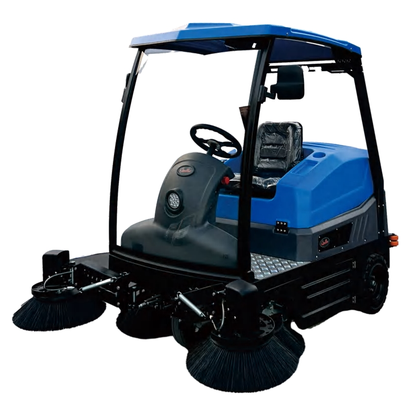
Choose a ride-on floor sweeper for your route
Choose a ride-on floor sweeper around the route and the waste collected on each round. Sweeping width describes the brush path; full machine dimensions and room to turn determine whether the equipment can reach each working area.
Need to compare equipment formats first? Explore our commercial floor sweeper supply range for ride-on sweeping, manual sweeping and dust-mopping equipment.
1000–1350 mm paths for divided routes
CB-115S, CB-125S and CB-135S offer 1000, 1250 and 1350 mm sweeping paths, with 60, 80 and 120 L hoppers. These models give you different widths and collection volumes to match the same route constraints.
View models and specifications →1400 mm sweeping with a 170 L hopper
CB-1400 combines a 1400 mm sweeping path and 170 L hopper. Compare its complete 1920 × 1400 × 2000 mm dimensions with your doors, turns and storage, alongside the loose-waste volume on each round.
View models and specifications →1950 mm paths for open rounds
CB1200 and CB-1900 both list 1950 mm sweeping widths, with 180 and 190 L hoppers. Check the full body, brush assemblies and surface-loading requirements before specifying them for open warehouse or property routes.
View models and specifications →Compare ride-on floor sweeper specifications
Choose two to four ride-on floor sweepers to compare the sweeping path, hopper, power and overall size. Open each model name for its complete specifications.
Choose a starting group
Select 2–4 models. Model names open the complete specifications.
| Specification | CB-115S |  CB-125S |  CB-135S |
|---|---|---|---|
| Sweeping width | 1000 mm | 1250 mm | 1350 mm |
| Hopper capacity | 60 L | 80 L | 120 L |
| Water tank capacity | 40 L | 10 L | 50 L × 2 |
| Main brush width | 440 mm | 490 mm | 590 mm |
| Side brush diameter × quantity | 400 mm × 2 | 450 mm × 2 | 500 mm × 2 |
| Working productivity | 6800 m²/h | 8000 m²/h | 10800 m²/h |
| Drive motor | 650 W | 1000 W | 1000 W |
| Main brush motor | 500 W | 550 W | 700 W |
| Side brush motor × quantity | 50 W × 2 | 90 W × 2 | 90 W × 2 |
| Suction fan motor | 200 W | 240 W | 240 W |
| Filter shaker motor | 60 W | --- | 60 W |
| Product dimensions | 1300 × 1000 × 980 mm | 1600 × 1250 × 1300 mm | 1650 × 1350 × 1200 mm |
| Machine weight | 240 kg | 301 kg | 371 kg |
| Lighting and signals | Headlight × 1; warning light × 1 | Headlight × 1; warning light × 1 | Headlight × 2; warning light × 1 |
Ride-on Floor Sweepers models and specifications
Choose a model to see its image, use description and complete specifications together. Keep debris-hopper volume separate from water-tank capacity. For a battery powered floor sweeper, include the matched charging arrangement, actual route and service stops in the operating plan.
No matching models. Try another name.
Ride-on sweepers with 1000–1350 mm sweeping paths
Compare CB-115S, CB-125S and CB-135S by their 60, 80 and 120 L hoppers, brush layout and complete machine dimensions.
CB-115S
1000 mm ride-on sweeping with a 60 L hopper
CB-115S
Choose CB-115S for a 1000 mm ride-on sweeping path with a 60 L hopper. Its 440 mm main brush and two 400 mm side brushes collect suitable loose debris, while the operator controls travel. Check the 1300 × 1000 × 980 mm machine dimensions and the fitted 48 V 67 Ah battery against your route and charging plan.
| Specification | CB-115S |
|---|---|
| Product dimensions | 1300 × 1000 × 980 mm |
| Travel speed | 0–10 km/h |
| Climbing gradient | 15% |
| Sweeping width | 1000 mm |
| Main brush width | 440 mm |
| Side brush diameter × quantity | 400 mm × 2 |
| Working productivity | 6800 m²/h |
| Battery capacity | 48 V 67 Ah |
| Operating time | 2–3 h |
| Hopper capacity | 60 L |
| Water tank capacity | 40 L |
| Drive motor | 650 W |
| Main brush motor | 500 W |
| Filter shaker motor | 60 W |
| Suction fan motor | 200 W |
| Side brush motor × quantity | 50 W × 2 |
| Noise | ≤70 dB |
| Machine weight | 240 kg |
| Lighting and signals | Headlight × 1; warning light × 1 |
The 40 L water tank is separate from the 60 L debris hopper. Plan the stated 2–3 hour operating period around the work and battery condition.
CB-125S
A wider path and 80 L collection capacity
CB-125S
CB-125S pairs a 1250 mm sweeping path with an 80 L hopper. It uses a 490 mm main brush and two 450 mm side brushes, with a listed 48 V 67 Ah battery. Include its 1600 × 1250 × 1300 mm product dimensions when planning access, storage and repeated commercial sweeping rounds.
| Specification | CB-125S |
|---|---|
| Product dimensions | 1600 × 1250 × 1300 mm |
| Travel speed | 0–10 km/h |
| Climbing gradient | 15% |
| Sweeping width | 1250 mm |
| Main brush width | 490 mm |
| Side brush diameter × quantity | 450 mm × 2 |
| Working productivity | 8000 m²/h |
| Battery capacity | 48 V 67 Ah |
| Operating time | 2–3 h |
| Hopper capacity | 80 L |
| Water tank capacity | 10 L |
| Drive motor | 1000 W |
| Main brush motor | 550 W |
| Filter shaker motor | --- |
| Suction fan motor | 240 W |
| Side brush motor × quantity | 90 W × 2 |
| Noise | ≤70 dB |
| Machine weight | 301 kg |
| Lighting and signals | Headlight × 1; warning light × 1 |
Keep the 10 L water tank separate from the 80 L debris hopper in your order specification. Identify filter and dust-control service items by the fitted assembly.
CB-135S
1350 mm sweeping for higher-volume rounds
CB-135S
For a 1350 mm sweeping path, CB-135S combines a 120 L hopper with a 590 mm main brush and two 500 mm side brushes. The machine measures 1650 × 1350 × 1200 mm. Match the path and collection volume to your loose-debris route, then include disposal and charging stops in the work plan.
| Specification | CB-135S |
|---|---|
| Product dimensions | 1650 × 1350 × 1200 mm |
| Travel speed | 0–10 km/h |
| Climbing gradient | 15% |
| Sweeping width | 1350 mm |
| Main brush width | 590 mm |
| Side brush diameter × quantity | 500 mm × 2 |
| Working productivity | 10800 m²/h |
| Battery capacity | 48 V 67 Ah |
| Operating time | 2–3 h |
| Hopper capacity | 120 L |
| Water tank capacity | 50 L × 2 |
| Drive motor | 1000 W |
| Main brush motor | 700 W |
| Filter shaker motor | 60 W |
| Suction fan motor | 240 W |
| Side brush motor × quantity | 90 W × 2 |
| Noise | ≤70 dB |
| Machine weight | 371 kg |
| Lighting and signals | Headlight × 2; warning light × 1 |
The water-tank configuration is 50 L × 2, separate from the 120 L debris hopper. Use appropriate floor-scrubbing equipment for bonded soil and dirty-water recovery.
1400 mm sweeping with a 170 L hopper
CB-1400 combines a 1400 mm sweeping path with a 170 L hopper. Include its canopy height and full machine dimensions in your access plan.
CB-1400
170 L collection capacity on a 1400 mm path

CB-1400
CB-1400 combines a 1400 mm sweeping path with a 170 L hopper, an integrated control panel and a 6 m² filter area. It lists a 48 V power source and a 4–6 hour continuous working period. Allow for the full 1920 × 1400 × 2000 mm machine and plan actual operating time around the route, loading and battery condition.
| Specification | CB-1400 |
|---|---|
| Product dimensions | 1920 × 1400 × 2000 mm |
| Net weight | 600 kg |
| Climbing gradient | 35% |
| Working productivity | 10000 m²/h |
| Sweeping width | 1400 mm |
| Turning radius | 10 km/h |
| Main/side brush length | 700 mm / 500 mm |
| Drive power | 2500 W |
| Power source | 48 V |
| Continuous working time | 4–6 h |
| Hopper capacity | 170 L |
| Filter area | 6 m² |
Check the full machine clearance and permitted manoeuvres against your route before ordering. Use the operating instructions for speed, turns and gradients.
Wide-path sweepers for open routes
CB1200 and CB-1900 list 1950 mm sweeping widths. Compare hopper volume, brush arrangement, operating period and machine dimensions around the same route.
CB1200
1950 mm sweeping with four side brushes

CB1200
CB1200 offers a 1950 mm sweeping path and 180 L hopper for open routes with suitable access. Four 500 mm side brushes work alongside a 690 mm main brush. Check the 2000 × 1950 × 1900 mm machine dimensions, 745 kg machine weight and listed 48 V 103 Ah battery when planning use and charging.
| Specification | CB1200 |
|---|---|
| Product dimensions | 2000 × 1950 × 1900 mm |
| Travel speed | 0–10 km/h |
| Climbing gradient | 15% |
| Sweeping width | 1950 mm |
| Main brush width | 690 mm |
| Side brush diameter × quantity | 500 mm × 4 |
| Working productivity | 15600 m²/h |
| Battery capacity | 48 V 103 Ah |
| Operating time | 2–3 h |
| Hopper capacity | 180 L |
| Water tank capacity | 100 L |
| Drive motor | 1200 W |
| Main brush motor | 1000 W |
| Filter shaker motor | 60 W |
| Suction fan motor | 240 W |
| Side brush motor × quantity | 90 W × 4 |
| Noise | ≤70 dB |
| Machine weight | 745 kg |
| Lighting and signals | Headlights × 2; spotlights × 2; brake lights × 2 |
This model has a 1950 mm sweeping path, a 180 L debris hopper and a separate 100 L water tank. Include the full body and brush assemblies in your access plan.
CB-1900
1950 mm sweeping with the largest listed hopper
CB-1900
CB-1900 provides a 1950 mm sweeping path and 190 L hopper, with front brush arms that lift and retract. Its 10 m² filter area and listed 5–7 hour continuous working period are further details for a larger-route comparison. Include the 2400 × 1950 × 1900 mm machine and brush-arm clearance in the access plan.
| Specification | CB-1900 |
|---|---|
| Product dimensions | 2400 × 1950 × 1900 mm |
| Net weight | 700 kg |
| Climbing gradient | 35% |
| Working productivity | 19500 m²/h |
| Sweeping width | 1950 mm |
| Maximum travel speed | 12 km/h |
| Main/side brush length | 700 mm / 550 mm |
| Drive power | 2500 W |
| Power source | 48 V |
| Continuous working time | 5–7 h |
| Hopper capacity | 190 L |
| Filter area | 10 m² |
Allow clearance for moving brush arms and use the permitted controls and adjustments. Match filters and dust-control service items to this model and the material collected.
Ride-on floor sweeper differences that shape your choice
Use the comparisons below to build a shortlist around access, debris capacity and the operating routine. The complete model tables retain the detailed brush, electrical and dimension specifications.
Seated operation on repeated rounds
All six models are driven by an operator. Choose the path and hopper around route length, access and debris volume, with time allowed for emptying, charging and routine maintenance.
1000, 1250 or 1350 mm in the S models
CB-115S, CB-125S and CB-135S pair wider paths with 60, 80 and 120 L hoppers respectively. All three specify 48 V 67 Ah batteries and 2–3 hour operating periods. Choose around route space and debris volume, then plan actual runtime around battery condition and the work performed.
1350 versus 1400 mm: compare the whole machine
CB-135S and CB-1400 differ by only 50 mm in sweeping width, but their hoppers are 120 and 170 L. Their product dimensions are 1650 × 1350 × 1200 mm and 1920 × 1400 × 2000 mm respectively. CB-1400 therefore belongs in the larger-capacity comparison, with its full dimensions included in the access plan.
Two 1950 mm choices for open routes
CB1200 has a 180 L hopper and four 500 mm side brushes; CB-1900 has a 190 L hopper and lifting/retracting front brush arms. Their listed working periods are 2 to 3 and 5 to 7 hours. Compare those features alongside their different overall lengths and your route's disposal and charging schedule.
Debris space and dust-control specifications
Hopper capacity measures collected solid-waste volume. The 40 L, 10 L, 50 L × 2 and 100 L water entries on the S models and CB1200 describe separate tanks, not dirty-water recovery capacity. CB-1400 and CB-1900 have 6 and 10 m² filter areas respectively. Use model-approved filters and dust-control procedures for the material collected; hazardous dust needs specifically suitable equipment and controls.
After collecting loose debris, use a commercial floor scrubber for suitable bonded soil. For a seated wet-cleaning format, compare our ride-on floor scrubbers.
Ride-on sweeping: from edge collection to disposal
Use these ride-on sweepers for suitable loose debris on compatible hard surfaces. Plan safe turns, pedestrian separation and hopper emptying, and follow the operating instructions for the exact model.
Floor sweeper brushes and edge collection
Side brushes guide edge debris toward the main sweeping path for collection. CB-115S, CB-125S and CB-135S each list two side brushes; CB1200 lists four. Choose replacement brushes by the exact model and fitted assembly, with the floor and debris in mind.
Hopper and disposal access
The hopper holds the collected solid waste until your operator empties it. Its capacity matters most alongside how much debris the route produces and how far the disposal point is from the work. Keep room for safe access when planning the machine's parking and emptying area.
Fitted suction and filtration components
On the S models and CB1200, the suction fan works with the fitted dust-control system. CB-1400 and CB-1900 have filter areas of 6 m² and 10 m² respectively. Maintain the fitted filters and dust-control components as instructed. Hazardous dust requires specifically suitable equipment and controls.
Operator controls and brush arms
The rider steers the route and monitors collection. CB-1400 has an integrated control panel, while CB-1900's front brush arms lift and retract. Allow room around moving brush assemblies and follow the model's instructions for their controls and permitted adjustments.

Your working sequence
- Inspect the floor and route. Remove long cords, wrapping film, oversized waste and sharp objects, and separate the work area from people and vehicles.
- Secure the hopper and inspect brushes, wheels and covers. For a ride-on machine, also check the power supply, steering and brakes. Make permitted adjustments only with the machine stopped and powered equipment isolated.
- Test a short section with representative debris. Drive the ride-on at a controlled low speed, then inspect collection before continuing along overlapping passes.
- Slow at corners and monitor the hopper and sweeping result. Stop if collection drops, debris becomes tangled or unusual dust or noise appears; keep hands clear until moving parts have stopped.
- Park securely at the disposal point and isolate powered equipment before emptying or service. Clear brush tangles, inspect wear and follow the fitted battery and charger instructions before the next shift.
See the CB1900 ride-on sweeper in operation
Watch the CB1900 being driven along a paved route, with brush controls and edge sweeping shown in use.
CB1900 driving, brush controls and sweeping
See the operator control travel and the front brush assemblies, then follow the machine along an outdoor sweeping route.
Floor sweeper care and safe use
Empty the hopper, inspect brushes and maintain the fitted dust-control system between jobs. Park securely and isolate power before cleaning or service. Follow the battery and matched charger instructions.
Routine care
- Empty collected waste after use. Park securely and isolate the ride-on before clearing wrapped material from brushes and axles.
- Inspect bristle wear, fasteners, wheel movement and hopper catches. Use the maintenance procedure for the fitted brush, filter and dust-control system.
- Keep water jets away from electrical parts. Wash only components approved for that method, allow them to dry and store the machine securely.
- Maintain and charge fitted batteries according to the matched equipment instructions. Stop work for damaged parts, unusual noise or increased dust, and arrange appropriate service before reuse.
Safe floor sweeper use
- Do not collect hot ash, burning waste, flammable liquids or unapproved hazardous dust. These sweepers are for suitable loose debris, not standing-water recovery or floor disinfection.
- Keep hands and feet away from moving brushes. Remove tangles only after stopping and isolating powered equipment; do not force a machine over steps or blocked material.
- Plan for the machine's dimensions and loading, separate routes from pedestrians and vehicles, and follow the model's limits for gradients, turns and outdoor conditions. Use only the slopes and manoeuvres permitted by the operating instructions.
Need help with a replacement?
Keep the exact model, fitted assembly and part details together when requesting service items.
Parts for your ride-on floor sweeper
Keep each ride-on floor sweeper, its fitted brush assemblies and service items together in the purchasing specification.


Main and side sweeping brushes
CB-115S, CB-125S and CB-135S use different main-brush widths and side-brush diameters; CB1200 lists four side brushes. Request floor sweeper brushes by exact model, fitting and quantity.
Filters and dust-control service parts
Order replacement filters and dust-control items for the system fitted to the machine. CB-1400 lists a 6 m² filter area and CB-1900 lists 10 m²; identify the installed element when arranging a replacement.
Battery and matched charger
Specify the fitted battery and matched charger with the machine. Include charger input requirements for the destination and follow the supplied equipment instructions for charging and maintenance.
Hopper and fitted wear parts
Identify the hopper, catches, covers or other service items by the exact machine and installed part. Keep requested replacements separate from the supplied package.
Planning brushes and service stock?
Send the model, fitted brush or part details and quantities alongside your machine order.
Plan your ride-on floor sweeper order
Order one model for a site or a mix for your fleet or distributor range. If you are still comparing, start with the route, debris and working schedule.
Models and quantities
List quantities for each ride-on model individually. Include door and turn restrictions, the waste collected and the location of the disposal point.
Brushes and service stock
Separate the supplied machine contents from extra brushes, filters and other service items. Identify the model and fitted assembly on each parts line.
Power, packing and destination
Include your destination, electrical requirements for charging and packing needs. The written offer identifies configuration, MOQ and lead time for that order.
Ready to price your model mix?
Send model quantities and your destination, together with any extra parts required.
Ride-on floor sweeper supply from CLEVO
CLEVO supplies commercial and industrial ride-on floor sweepers for facility teams, cleaning contractors and distributors. Build your order around the sweeping path, hopper, access space and power configuration required at each site.
For the broader equipment range, visit our commercial floor sweeper supply page.

Describe the route and debris
Send floor type, route width and examples of the loose waste collected. Include door and turn restrictions, disposal access and your intended working schedule.

Build your fleet or distributor range
List quantities for each ride-on model, the required battery and charging arrangements, and model-specific brush or filter service items.

Get an itemised bulk-order offer
Request an itemised offer with your destination and packing requirements. Your quotation sets out the supplied configuration, requested spare parts, MOQ and lead time for that order.
Support for your ride-on floor sweeper
Use the selected model and fitted components when arranging replacement parts, charging and delivery. Keep the agreed configuration with your written order details.
Model-specific replacements
Request main brushes, side brushes and filter service items against the exact model and fitted assembly. Keep dimensions, quantities and part identification together.
Battery and charger configuration
For powered models, check the fitted battery and matched charger instructions before use or replacement. Include destination electrical requirements in the order specification.
Packing and supply details
Your destination, model quantities and packing requirements form the delivery request. Keep the agreed contents, MOQ and lead time in the quotation for that order.
Have a model or order question?
Tell us the model and the part, charging or delivery details you need to discuss. You can also request the model documents needed for your sourcing review.
Ride-on sweeping across your commercial sites
Warehouse aisles, workshop approaches and property routes need a machine that can pass, turn and empty safely. Assess the surface, loose waste and working space before selecting an industrial floor sweeper.
Match the ride-on sweeper to the route
Choose around the complete machine and brush assemblies, with safe separation from pedestrians and vehicles. Trial representative debris and include disposal and charging stops in the work plan.
Ride-on Floor Sweepers buying questions
Answers for your model shortlist, operation and purchasing plan.
Does a ride-on floor sweeper wash the floor?
Its main task is collecting suitable loose dirt and small debris in a hopper. Bonded grease, wet floor scrubbing and dirty-water recovery need suitable separate equipment. Keep the separate water-tank specification distinct from a recovery system.
Which ride-on floor sweeper should I shortlist?
Start with the available route and turning space. CB-115S offers a 1000 mm path and 60 L hopper; the other models extend to 1950 mm and 190 L. Check the complete product dimensions, debris volume and charging routine before ordering.
Is sweeping width the doorway clearance I need?
No. Sweeping width describes the brush path, while access also depends on the body, projecting brush assemblies and room to steer. Check the opening, approach and turn together before choosing the machine.
Can I calculate my shift output from the m²/h figures?
Use the productivity figures as references, not guaranteed shift totals. Turns, overlap, pedestrian stops, debris loading and emptying all affect the area completed. A representative route trial helps you plan staffing and scheduling around the actual task.
How long do the ride-on sweepers operate?
The stated periods are 2–3 hours for CB-115S, CB-125S, CB-135S and CB1200; 4–6 hours for CB-1400; and 5–7 hours for CB-1900. However, actual duration depends on battery condition, load and working conditions. Include charging and disposal stops in the shift plan rather than treating the upper figure as a guaranteed minimum.
Can these machines work without a driver?
Every model here requires an operator to drive, steer and monitor collection. Keep people clear of moving brush assemblies and follow the model instructions for controls, gradients and permitted manoeuvres.
Can a floor sweeper collect fine or hazardous dust?
Use each machine only for suitable loose debris within its approved application. Hazardous dust needs equipment and controls specifically suited to that material. Check the required filtration and dust-control provisions against the actual material before use; filter area alone is not a filtration grade.
Does a larger hopper always mean fewer stops?
A larger hopper provides more stated collection volume, but stop frequency also depends on debris bulk, loading pattern and safe handling limits. For example, paper scraps fill space differently from denser dirt. Plan emptying with representative waste, and keep volume in litres separate from weight capacity.
What should I send for a wholesale quotation?
Send model quantities, route and debris details, destination, charging requirements and requested wear parts. For a distributor order, list quantities by model. Then check the supplied configuration, packing, MOQ and lead time in the quotation for that order.
Which brushes, batteries and chargers are included?
The supplied package depends on the model and configuration. Your quotation identifies the machine contents, while extra brushes, filters and replacement items appear separately. For powered models, include the fitted battery and matched charging configuration in the order details.
Request ride-on floor sweeper pricing
Get model-based pricing for your commercial or industrial sweeping fleet.
Share route restrictions, debris type and quantities so the offer covers the selected ride-on machines, power configuration and service items.
Tell us what you need to source
- Floor type, loose debris and route restrictions
- Ride-on models and quantities
- Battery, matched charger and requested wear parts
- Working schedule and delivery destination